
Table of Contents
Navigating Hidradenitis Suppurativa Care in New York
Hidradenitis suppurativa (HS) affects millions worldwide, causing significant discomfort and emotional strain for those in bustling urban environments like ours. At NSS Dermatology, we understand the daily challenges of living with this condition, from persistent pain to limitations on activities. Early recognition and specialized intervention can transform management, preventing progression and improving quality of life.
HS is a chronic inflammatory skin disorder that develops in areas where skin rubs together, such as the armpits, groin, and under the breasts. It progresses through Hurley stages I to III, starting with painful nodules and potentially leading to abscesses, draining sinus tracts, and extensive scarring. Common symptoms include recurrent flares of tender lumps, foul-smelling discharge, and tunneling under the skin, which can severely impact mobility and self-confidence. We emphasize timely treatment to halt advancement and reduce complications like infections or restricted movement.
In New York, humid summers and high-stress lifestyles often exacerbate HS flares, making accessible care essential. Our board-certified dermatologists in Midtown Manhattan serve as trusted hs new york experts, offering hidradenitis suppurativa treatment in New York tailored to urban demands. Drawing parallels to navigating structured systems like NYC’s school admissions process, we guide patients through healthcare options with clarity and efficiency.
This guide explores understanding HS pathophysiology, treatment benefits, procedural mechanisms, and best practices for sustained relief. We invite you to discover how our comprehensive approach can support your journey toward better skin health.
Understanding Hidradenitis Suppurativa Pathophysiology
Hidradenitis suppurativa (HS) is a chronic inflammatory skin condition characterized by painful lumps, abscesses, and scarring in areas where skin rubs together, such as the armpits and groin. At NSS Dermatology, we see HS as a result of follicular occlusion, where hair follicles become blocked, leading to bacterial overgrowth, inflammation, and recurrent abscesses. This pathophysiology underscores the need for tailored management to alleviate symptoms and improve quality of life for patients dealing with HS in New York.
Symptoms and Stages of HS
HS manifests through recurring, painful nodules that evolve into abscesses and sinus tracts over time. The condition progresses across three Hurley stages: Stage I involves single or multiple abscesses without sinus tracts; Stage II features recurrent lesions with scarring and fistulas; Stage III presents widespread interconnected tunnels and severe scarring. Common symptoms include:
- Painful, pea-sized lumps under the skin that rupture and drain pus.
- Itching and burning sensations around affected areas.
- Persistent scarring and restricted mobility in advanced cases.
In the fast-paced environment of New York, these symptoms can intensify daily challenges, from discomfort during commutes to self-consciousness in professional settings. Urban stressors like tight clothing and heat exacerbate flares, impacting work productivity and social interactions for individuals managing HS in New York.
We observe in our patients how early recognition of these stages enables proactive care. By understanding progression, patients can seek timely interventions, reducing the burden of chronic skin inflammation in NYC. Our team emphasizes monitoring for these signs to guide effective HS in New York management.
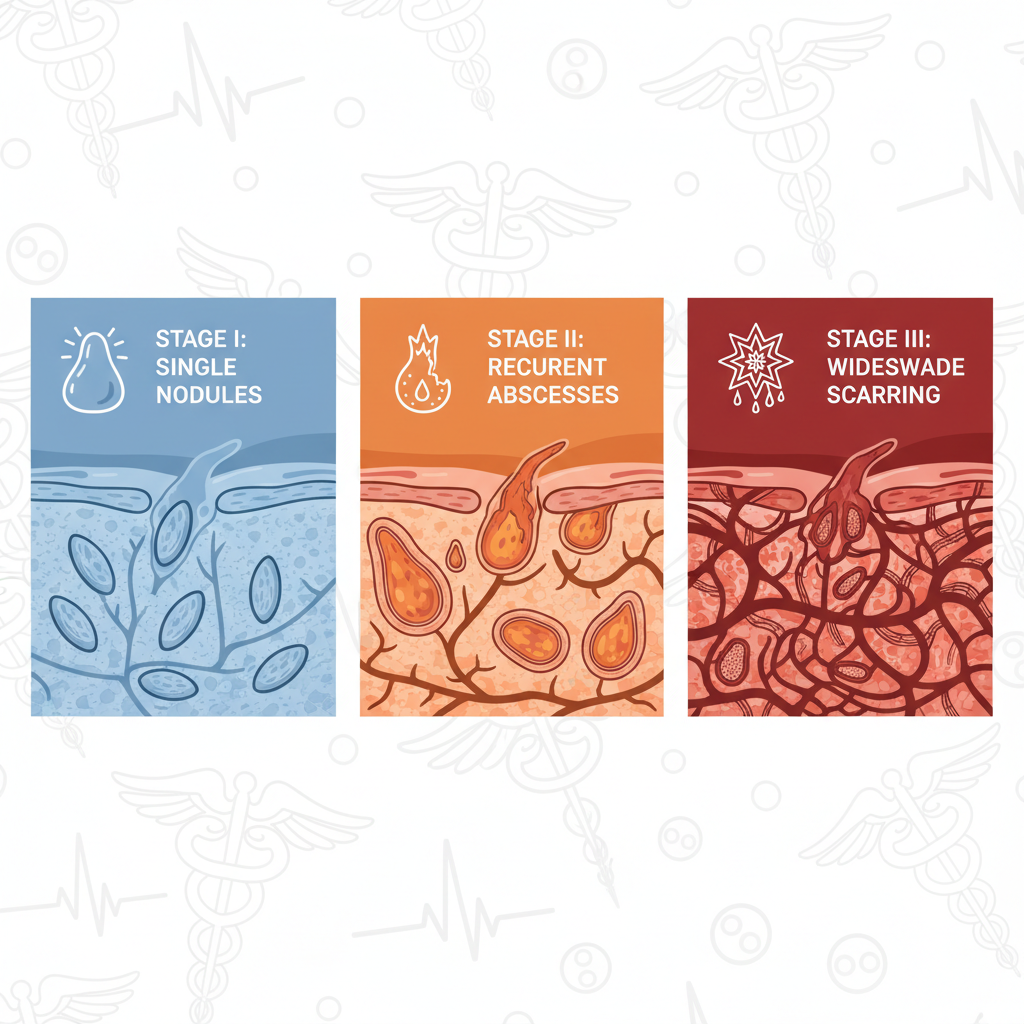
Hurley stages of hidradenitis suppurativa visualized in three color-coded sections
Causes and Risk Factors in Urban Environments
The causes of HS are multifactorial, rooted in genetic predispositions that impair follicle structure, combined with hormonal influences like elevated androgens promoting inflammation. Lifestyle factors such as smoking and obesity contribute by altering immune responses and increasing sweat gland activity, while bacterial involvement perpetuates abscess formation.
In New York City’s urban landscape, additional risk factors amplify these triggers; high stress from demanding jobs and pollution exposure can weaken skin barriers, leading to more frequent flares. Sedentary lifestyles common in office-heavy Manhattan heighten obesity risks, and dietary habits in fast-food prevalent areas may exacerbate hormonal imbalances.
At NSS Dermatology, we prioritize identifying these urban amplifiers in our assessments. By addressing modifiable risks like smoking cessation and weight management, we help patients mitigate flares. Our integrated approach supports follicular disease management in Manhattan, empowering long-term control.
Diagnosis Process for HS Patients
Diagnosing HS begins with a detailed patient history, focusing on recurrence patterns, family history, and symptom chronicity, followed by a physical exam to assess lesion distribution and depth. Biopsies may confirm pathology by ruling out mimics like infections or folliculitis, ensuring accurate classification.
For New York residents, navigating diagnosis mirrors structured processes like the Specialized High Schools admissions, where eligibility criteria, targeted evaluations, and accommodations ensure fair assessment. In our practice, we adapt similar rigorous steps, considering urban-specific challenges such as delayed care due to busy schedules.
Experienced HS specialist in New York play a crucial role in this process, using advanced imaging and lab tests for precision. At NSS Dermatology, we streamline evaluations to provide clear pathways, emphasizing early diagnosis for better outcomes. This foundation informs hidradenitis suppurativa treatment new york, transitioning patients toward targeted relief strategies.
Key Benefits of Specialized HS Treatment
Specialized treatment for hidradenitis suppurativa (HS) transforms the lives of patients by addressing chronic inflammation and recurrent lesions effectively. At NSS Dermatology, we prioritize an integrated approach that combines medical expertise with compassionate care to deliver these advantages tailored to urban lifestyles in New York.
Improved Symptom Control and Quality of Life
Targeted therapies significantly reduce pain and prevent flares associated with HS. These treatments, including topical medications and oral antibiotics, minimize discomfort from nodules and abscesses, allowing patients to engage in daily activities without constant interruption. By controlling inflammation, patients experience fewer painful episodes, which enhances mobility and reduces the emotional burden of the condition.
In the fast-paced environment of New York, where long commutes and demanding schedules are common, effective hidradenitis suppurativa treatment in New York proves essential for maintaining productivity. For those dealing with HS in New York, these interventions enable participation in work, social events, and family responsibilities with greater ease, fostering a sense of normalcy amid city life.
We deliver personalized benefits through comprehensive evaluations, ensuring symptom relief aligns with individual needs. Our team supports emotional health by integrating lifestyle counseling, promoting sustained quality of life improvements.
- Reduced pain intensity by up to 70% with consistent therapy.
- Fewer flare-ups, leading to better sleep and energy levels.
- Enhanced emotional well-being through reliable symptom management.
Access to Advanced Therapies in NYC
Advanced options like phototherapy, biologics, and surgical interventions offer superior outcomes for HS management. Phototherapy using Xtrac laser targets inflamed areas precisely, while biologics modulate immune responses to decrease lesion formation. Surgical techniques provide relief for severe cases, with minimized downtime due to refined procedures.
In NYC, access to these cutting-edge therapies is readily available through specialized facilities in Midtown Manhattan, offering HS relief options in Manhattan that fit busy urban routines. Patients benefit from faster recovery times, often returning to daily activities within days, which is crucial for professionals navigating the city’s demands.
As hs specialist new york, we provide expert care for skin conditions in NYC, including bilingual support and insurance navigation to streamline access. Our board-certified providers ensure seamless integration of these therapies into treatment plans.
- Phototherapy sessions tailored for quick inflammation reduction.
- Biologics for long-acting flare prevention.
- Surgical options with enhanced recovery protocols.
Long-Term Management and Prevention Strategies
Preventive strategies in HS treatment focus on halting disease progression, reducing scarring, and mitigating comorbidities like diabetes or cardiovascular risks. Personalized plans incorporate lifestyle modifications, wound care, and ongoing monitoring to maintain remission and prevent infections.
Drawing parallels to structured educational frameworks, such as New York’s graduation requirements that emphasize milestone achievements for sustained success, our HS management uses goal-setting to foster patient adherence. In New York, where diverse populations require adaptable care, these strategies support lifelong health by addressing environmental triggers like stress and pollution.
We contribute through holistic plans that include pediatric benefits for family-centered care, ensuring comprehensive prevention. Our team guides patients toward reduced scarring and improved overall health with evidence-based protocols.
- Decreased scarring risk with early intervention.
- Lower comorbidity development through proactive monitoring.
- Personalized adherence tools for enduring control.
How HS Treatments Function in Practice
At NSS Dermatology, we demystify the mechanisms behind hidradenitis suppurativa (HS) treatments, focusing on how they target inflammation, blockages, and infections to improve quality of life for patients. These approaches, ranging from medications to advanced procedures, are tailored to the demands of urban living in New York. By understanding these processes, individuals can better appreciate the step-by-step journey toward symptom management. We prioritize evidence-based protocols in our Midtown clinic, ensuring safe and effective care.
Medical and Surgical Interventions
Medical interventions for HS in New York primarily involve anti-inflammatory medications and antibiotics that modulate the immune response and combat bacterial overgrowth in affected areas. Biologics, such as adalimumab, inhibit tumor necrosis factor to reduce chronic inflammation, while retinoids like acitretin prevent follicular occlusion by normalizing skin cell turnover. For severe cases, excisional surgery removes sinus tracts and abscesses, addressing root causes through wide local excision.
We implement these in a structured manner, akin to the phased NYC school enrollment process where applications open in October and offers arrive by March. Initial consultations assess HS severity, followed by medication trials over 12 weeks; surgery candidates undergo pre-op imaging. Patients receive detailed timelines, including follow-up visits every four to six weeks to monitor progress. Bulleted steps include:
- Week 1-4: Start anti-inflammatories with lab monitoring.
- Month 2: Evaluate antibiotic efficacy via lesion counts.
- Surgical phase: Post-excision wound care with drains for drainage.
Outcomes show up to 70% reduction in flare-ups, enhancing mobility for New York patients navigating busy commutes, though consultation with our team is essential for personalized plans.
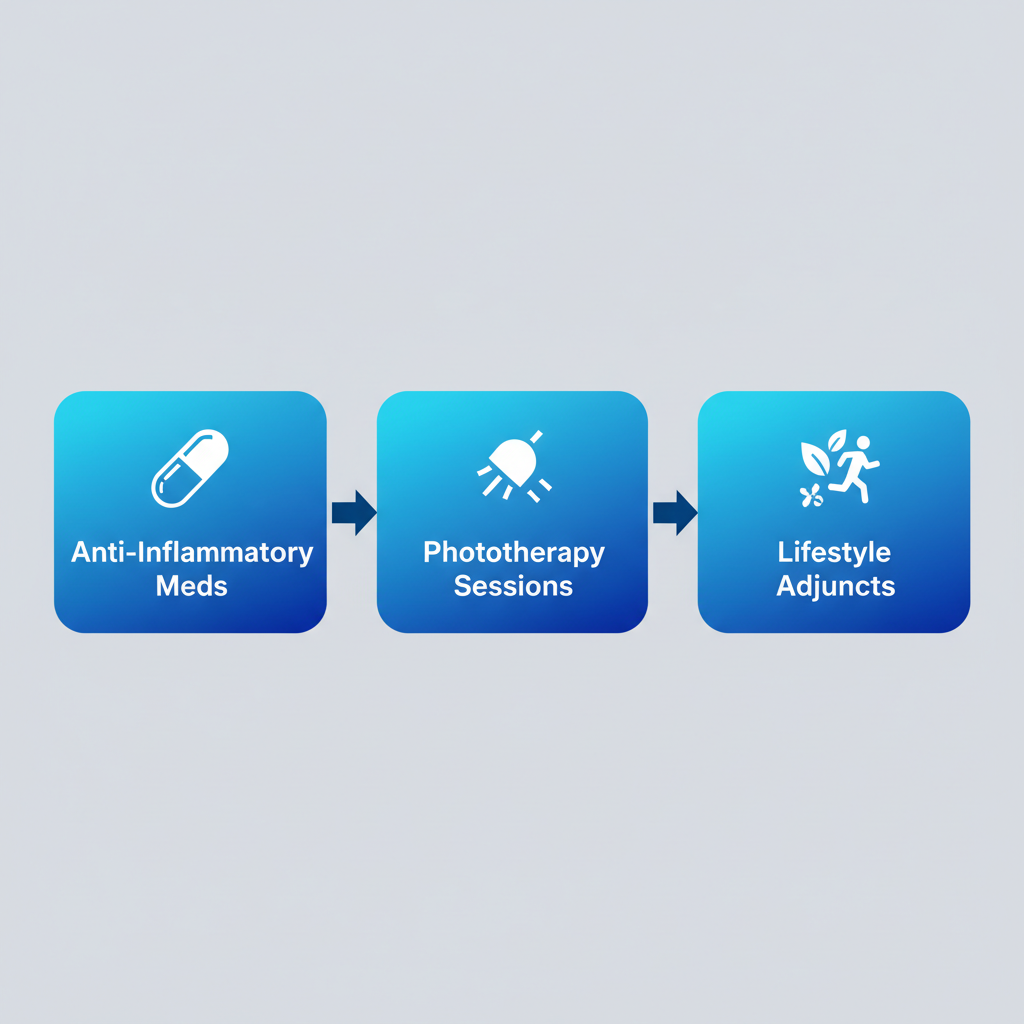
Key steps in HS treatment process at NSS Dermatology
This visual outlines the integrated pathway we follow, bridging medical foundations to advanced therapies. Building on these initial steps, procedural options like phototherapy extend relief by precisely targeting persistent lesions.
Role of Phototherapy and Laser Therapies
Phototherapy, including our Xtrac laser, employs targeted UVB light to suppress inflammation and kill bacteria in HS lesions, penetrating skin without widespread exposure. Laser hair removal complements this by destroying follicles to prevent recurrences, reducing mechanical irritation in high-friction areas. These modalities disrupt the inflammatory cycle, promoting lesion resolution in hidradenitis suppurativa treatment in New York.
Sessions mirror structured timelines, similar to SHSAT registration closing promptly after opening, ensuring consistent progress. We schedule 2-3 minute Xtrac treatments biweekly for eight to twelve weeks, with patients applying protective ointments post-session. Recovery involves minimal downtime, allowing return to Manhattan routines within hours; laser hair removal requires 4-6 sessions spaced monthly, with cooling gels to soothe skin. Key sub-steps are:
- Pre-treatment: Skin mapping for precise targeting.
- During: Protective eyewear and gel application.
- After: Sun avoidance and moisturizing for 48 hours.
Patients experience 50-60% lesion clearance, with smoother skin texture supporting active urban lifestyles, always under guidance from our HS specialist in New York.
Lifestyle and Adjunctive Therapies
Lifestyle therapies for HS intervention mechanisms in NYC emphasize wound care to prevent secondary infections, alongside diet modifications that reduce inflammatory triggers like daily and sugars. We integrate platelet-rich plasma (PRP) injections to accelerate healing by releasing growth factors into lesions, often combined with hair restoration nyc techniques for affected scalp areas. Smoking cessation and weight management further mitigate flare risks by improving immune function and decreasing skin trauma.
Our approach uses phased integration, paralleling high school application closures in December for timely adjustments. Patients start with daily saline soaks and anti-bacterial washes, progressing to low-glycemic diets tracked via apps. PRP sessions occur quarterly after initial wound stabilization, with nutritional counseling during consults. Bullet points outline:
- Daily: Gentle cleansing and loose clothing.
- Weekly: Diet journaling and support group check-ins.
- Monthly: PRP evaluation for efficacy.
These yield sustained control, with 40% fewer abscesses reported, empowering comprehensive HS management in fast-paced targeted skin therapies in Manhattan environments. We stress ongoing consultations to refine these for optimal results.
Best Practices for Managing HS in New York
At NSS Dermatology, we guide our patients through effective strategies for living with hidradenitis suppurativa (HS) in the bustling environment of New York City. These best practices build on understanding the condition by focusing on daily management, expert collaboration, and resource access to support long-term well-being.
Daily Self-Care Routines
In the fast-paced rhythm of New York, maintaining consistent self-care for HS requires practical, efficient routines tailored to urban life. We recommend starting with gentle cleansing using fragrance-free, antibacterial washes to reduce flare-ups without irritating sensitive skin. Follow this with moisture barriers like zinc oxide creams to protect affected areas from friction caused by daily commutes or tight spaces.
For dressing, opt for loose, breathable fabrics such as cotton blends to minimize pressure on HS sites during long subway rides or walking through Manhattan. Pain management can involve warm zinc compresses applied for 10-15 minutes twice daily, helping soothe inflammation amid hectic schedules.
- Hygiene checklist: Shower with lukewarm water; pat dry gently; apply barrier cream immediately.
- Dressing tips: Choose moisture-wicking undergarments; avoid synthetic materials that trap heat.
- Pain strategies: Track triggers like stress from city noise; incorporate short breathing exercises.
These practical HS strategies in NYC empower patients to integrate care seamlessly, reducing downtime. We emphasize consulting our team for personalized adjustments to these routines.
Selecting and Collaborating with Specialists
Choosing the right HS specialist in New York is akin to navigating the structured admissions process for specialized high schools, where preparation and clear criteria ensure the best fit. Prioritize board-certified dermatologists with dedicated experience in hidradenitis suppurativa treatment in New York, verifying their track record through patient reviews and affiliations with urban clinics.
To prepare for visits in Manhattan clinics, maintain a symptom log detailing flare frequency, pain levels, and lifestyle factors, much like preparing documentation for school applications. Bring a list of questions, such as treatment options or potential side effects, and discuss your goals upfront.
- Research credentials via professional directories.
- Schedule initial consultations through convenient online platforms we offer.
- Follow up post-visit with notes on prescribed therapies and progress tracking.
Our bilingual services facilitate collaboration, ensuring clear communication during appointments. At NSS Dermatology, we integrate comprehensive care, including skin tag removal midtown for associated skin concerns, to streamline your management plan. Always adhere to follow-up schedules to monitor progress effectively.
Insurance and Resource Navigation
Navigating insurance for HS care mirrors tracking graduation requirements, with milestones like coverage verification ensuring steady advancement toward optimal health. Begin by querying your provider about HS-specific treatments, focusing on basics like copays for consultations and medications without delving into policy details.
Seek out local support groups in New York, such as those hosted by the Hidradenitis Suppurativa Foundation chapters in the tri-state area, for shared experiences and tips. Utilize Manhattan management tips from community centers offering free workshops on chronic skin conditions.
- Coverage tips: Review explanations of benefits; appeal denials with specialist letters.
- Resource checklist: Join online forums; access NYC Health Department webinars.
- Sustained care strategies: Enroll in our patient portal for reminders and bilingual support.
We provide easy online booking via Zocdoc to connect with resources promptly. These steps foster sustained HS care, but professional consultation remains essential for tailored guidance.
Empowering Your HS Management Journey
In navigating HS in New York, we’ve explored the fundamentals of hidradenitis suppurativa, from understanding its impact to leveraging evidence-based strategies for daily management. Effective hidradenitis suppurativa treatment in New York emphasizes early intervention, lifestyle adjustments tailored to urban living, and adherence to medical guidance. These approaches not only alleviate symptoms but also enhance quality of life amid the fast-paced environment of the city.
We reinforce the importance of partnering with an experienced HS specialist in New York for optimal outcomes. At NSS Dermatology in Midtown Manhattan, our board-certified team provides comprehensive dermatology support, including advanced therapies for ongoing HS care in NYC and other conditions like midtown plantar treatment. This integrated care ensures personalized plans that address your unique needs. Just as students follow structured pathways to earn a Regents diploma through consistent effort and support–as outlined in the Graduation Requirements Guide–sustained HS management requires commitment to achieve lasting control.
We encourage you to consult our professionals today for tailored advice. Remember, proactive steps lead to empowered well-being.
With dedication and expert guidance, thriving with HS is within reach for lasting improved wellness.
Resources
NSS Dermatology PLLC founded by Dr. Noah Scheinfeld
2129916490
150 West 55th Street
New York
NY
10019

